
Over 25,278 people have already experienced our coaching since 2006!
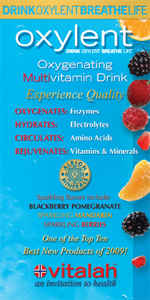 Multivitamin Drink
 More info >>
 More info >>
 Sports Massage Therapy
18.5 - 24.9 = Normal
25 - 29.9 = Overweight
> 30 = Obesity


If time permits, I would like to sign up for a proper course. It was good exercise :)
- Beatty Sec
- Beatty Sec
- Beatty Sec
- ICA
- CHIJ St Nicholas Girls School
There were so many moves of self-defense. Coaches are very nice. This rocks!
- Northland Primary
- CHIJ St Nicholas Girls School
Coach make us feel “Taichi"
- Hong Wen School
I want to learn more advanced Taichi.
- Hong Wen School
- Princess Elizabeth Primary
The coach is very good in Wushu, I would like to continue learning.
- Princess Elizabeth Primary
- Princess Elizabeth Primary
Read More >>
Wudang Nine-Form Tai Chi was developed in 2014 by the Martial Arts Bureau of the Wudang Mountain Special Zone. The compilation and creation of the routine were led by Mr. Yang Qunli of the Wudang International Martial Arts Institute at Wuhan Sports University. Mr. Yang is a recognized inheritor of Wudang martial arts (a national intangible cultural heritage), an 8th Duan in Chinese martial arts, and the 18th-generation lineage holder of Wudang Taiyi Five Elements Fist.
The creation of the Wudang Nine-Form Tai Chi draws on classical Wudang sources such as Wudang Sanfeng Original Tai Chi, Wudang Old Frame Tai Chi, and Taiyi Five Elements Fist. It is deeply rooted in Daoist philosophy, the alchemical teachings of Zhang Sanfeng, and traditional Chinese culture.
Wudang Nine-Form Tai Chi is a refined essence of traditional Tai Chi styles. It emphasizes internal training of essence, energy, and spirit, alongside external cultivation of form, posture, and breath. It unites health cultivation, martial application, and spiritual understanding—making it a complete internal martial arts system.
1. Preparation Posture (Yubei Shi)
Key points: Stand upright and centered, relax the body and focus the mind. Lightly lift the crown of the head.
2. Opening Movement (Qishi)
Key points: Tuck in the hips, sink the waist, round the form, and draw energy to the Dantian
3. Embrace Yin and Yang (Huai Bao Yin Yang)
Key points: Rotate the hips, embrace the Tai Chi sphere with the hands, forming a continuous circle.
4. Parting the Wild Horse’s Mane (Ye Ma Fen Zong)
Key points: Use the waist as the axis, both hands draw arcs, arms stretch out like the wings of a great bird.
5. Grasp the Sparrow’s Tail (Lan Que Wei)
Peng (Ward Off):
Key points: Move in smooth arcs, arms round and expanded.
Lu (Rollback):
Key points: Follow the curve, distinguish solid and empty, energy in the palms.
Ji (Press):
Key points: Form a rounded frame, body like a bow, power through the back of the hands.
An (Push):
Key points: Coordinate up and down, sink the entire body, push from the waist.
6. Pluck the Peach Beneath the Leaf (Ye Di Zhai Tao)
Key points: Move from high to low, seek curve within straight lines, pluck with the fingertips.
7. Jade Dragon Shakes its Scales (Yu Long Dou Lin)
Key points: Spiral and release energy, rotate the body as the axis, twist from both upper arms.
8. The Taoist Bars the Gate (Dao Ren Shuan Men)
Key points: Distinguish empty and full, respond from both sides, elbow power comes from bending.
9. Push the Mountain to Fill the Sea (Tui Shan Tian Hai)
Key points: Follow the spine to push, move the body as one unit, strike with shoulder and chest.
10. Closing Posture – Righteous Energy Remains (Shou Shi)
Key points: Return from movement to stillness, sink energy and relax, spirit and intention internalize.